Introduction — Why Vastu Still Comes Up in Every Hyderabad Home Search
Talk to almost any homebuyer in Hyderabad — first-timer or seasoned investor — and Vastu comes up at some point in the conversation. Not always as a strict rulebook, but as a quiet checklist running in the background while they walk through a flat or stand on an empty plot. Even buyers who don't consider themselves "traditional" often pause at the same questions: Which way does the main door face? Where's the kitchen? Is this corner okay?
That's not superstition holding on out of habit. It's because Vastu, at its core, is really about orientation, light, airflow, and how a space feels to live in day after day — things that genuinely affect comfort, even if you strip away the cultural framing. And in a city like Hyderabad, where resale value and long-term liveability both matter to buyers, Vastu compliance has quietly become a practical filter, not just a belief system.
What Vastu Actually Evaluates in a Home
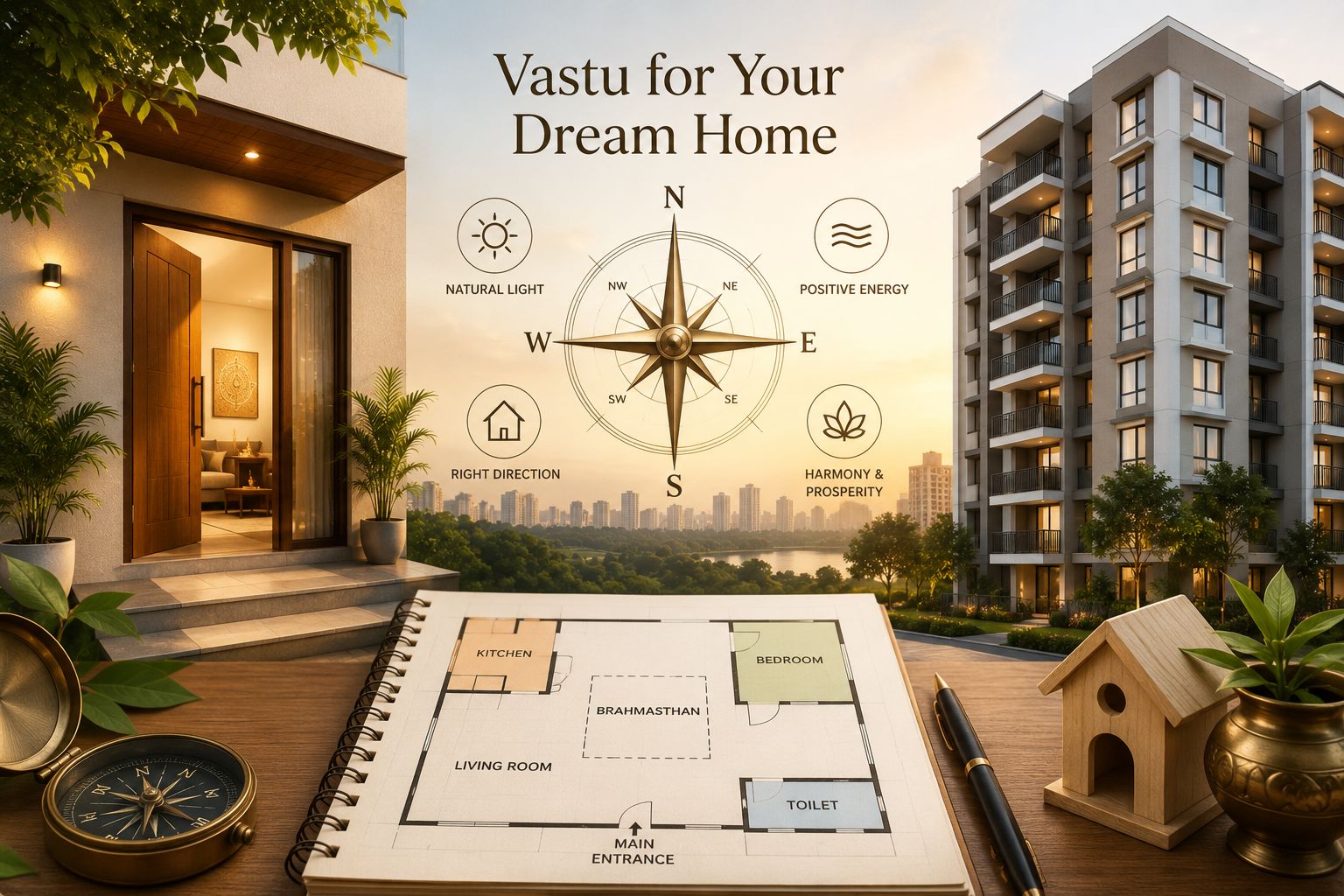
Before getting into specific directions and placements, it helps to understand what Vastu is really assessing. It isn't random rules — it's a framework built around five things: the direction a home faces, how natural light and air move through it, where the "energy centre" (brahmasthan) of the plot sits, and how rooms are positioned relative to each other and the sun's path through the day.
It's Less About Rules, More About Reading a Layout
A north-facing home with a cluttered, badly-lit interior isn't automatically "good Vastu." A well-oriented east-facing home with sensible room placement usually is. The direction matters, but so does how the space is actually used.
Main Door and Entrance — The Detail Buyers Check First
The entrance is usually the first thing buyers ask about, and for good reason — Vastu treats the main door as the point where energy, air, and people all enter the home together. North, east, and northeast-facing entrances are generally considered the most favourable, largely because they align with better morning light and airflow through the day. Northwest is considered acceptable, while south, southwest, and west-facing doors are viewed as weaker and usually need some kind of correction — a mirror, specific lighting, or careful placement of the pooja room to balance things out.
In practice, this is also why east and north-facing units in Hyderabad projects tend to move faster and often hold their resale price a little better than south or west-facing units in the same building.
Kitchen, Bedroom, and Room Placement
Beyond the entrance, three placements come up again and again in every Vastu conversation:
- Kitchen: Ideally in the southeast corner. This is thought to align cooking with the direction associated with fire and energy, and it's one of the more commonly checked placements by buyers.
- Master bedroom: Usually recommended in the southwest, considered the most stable and grounding zone of a home.
- Toilets and bathrooms: Best avoided in the northeast or the exact centre of the home (the brahmasthan), since this zone is meant to stay open and unobstructed.
What If the Layout Doesn't Match?
Very few ready-built homes tick every single box, and that's normal. Where the structure can't be changed — which is most of the time in an apartment — Vastu offers workaround remedies: mirror placements, specific colours, indoor plants, or adjusting furniture layout to correct the flow without touching the walls.
Independent Houses vs. Apartments — Does Vastu Apply Differently?
The core Vastu principles — entrance direction, kitchen and bedroom placement, and an open central zone — apply to both independent houses and apartments. The real difference is control. With an independent house or an open plot, a buyer can actually design around Vastu from scratch — choosing the plot shape, entrance position, and room layout before construction even starts. With an apartment, the structure is already fixed, so Vastu becomes more about selecting the right unit within a project (facing, floor, position) and using remedies for anything that can't be changed.
This is part of why plot buyers in Hyderabad often spend more time on Vastu upfront — they're evaluating shape, slope, and the surrounding environment (avoiding low-lying land, proximity to graveyards or hospitals, and preferring elevated plots) rather than just picking a unit off a floor plan.
Does Vastu Really Affect Resale Value?
This is where Vastu moves from belief into practical real estate strategy. In Hyderabad's resale market, a meaningful share of buyers actively filter listings by facing direction — east and north-facing homes in particular. That demand shows up in two ways: these units tend to sell faster, and they often hold their price better than similar non-compliant units in the same building or layout. Whether or not a buyer personally follows Vastu, ignoring it entirely can quietly narrow the pool of future buyers when it's time to sell.
A Balanced Take — Guideline, Not Gospel
It's worth saying plainly: Vastu isn't a legal requirement, and plenty of families buy and thrive in homes that don't tick every Vastu box. Location, budget, builder reputation, connectivity, and how a home actually fits your life should still come first. Vastu works best as one more lens to evaluate a property through — not the single deciding factor that overrides everything else. Buyers who treat it as a practical checklist, rather than a rigid ritual, tend to get the most useful value out of it.
Conclusion
Vastu's staying power in Hyderabad's real estate market isn't really about superstition — it's about orientation, light, and layout choices that affect how a home feels to live in, and how easily it sells later. Whether you're evaluating an open plot, an independent house, or a ready apartment, a basic Vastu check — entrance direction, kitchen and bedroom placement, and an unobstructed central space — is a simple, low-effort step that can save regret later and keep the resale door open. Treat it as a smart filter alongside location and budget, not a replacement for either.
Frequently Asked Questions
Is Vastu really important when buying a home, or is it just a tradition?
It's a mix of both. Some elements — like entrance direction, natural light, and airflow — have real practical benefits regardless of belief. Other parts are rooted in tradition and personal comfort. Most buyers treat it as a useful guideline rather than a strict rule, checking the basics without over-complicating the decision.
Which direction is considered best for a house as per Vastu?
North, east, and northeast-facing homes are generally considered the most favourable, mainly because they get better natural light and airflow through the day. Northwest is acceptable, while south and southwest-facing entrances are considered weaker and often need remedies like specific lighting or mirror placement.
Does Vastu apply to apartments the same way it applies to independent houses?
The core principles — entrance direction, kitchen and bedroom placement, an open central zone — apply to both. The difference is control: with an independent house or plot, you can design around Vastu from the start. With an apartment, you're mostly choosing the best-oriented unit available and using remedies for anything fixed that doesn't fully comply.
Does Vastu compliance actually affect resale value in Hyderabad?
Yes, to a meaningful extent. A notable share of buyers specifically filter for east or north-facing homes, which means Vastu-compliant units often sell faster and hold their price slightly better in resale compared to similar non-compliant units in the same project.
What if my dream home doesn't fully match Vastu guidelines?
That's common, especially with apartments where the layout is fixed. Vastu offers workarounds — mirrors, colour choices, plant placement, and furniture arrangement — that can help balance a space without any structural changes. Very few homes are 100% Vastu-compliant, and that's not usually a dealbreaker.
Where should the kitchen and master bedroom ideally be placed?
The kitchen is traditionally best placed in the southeast corner, while the master bedroom is recommended in the southwest — considered the most stable zone of the home. Toilets and bathrooms are generally best kept out of the northeast and away from the exact centre of the home.
Should I choose Vastu compliance over a better location or price?
No — location, budget, connectivity, and builder reputation should still come first. Vastu works best as an additional filter when comparing similar options, not as a reason to overlook a genuinely better property on the fundamentals.
What should I check for Vastu before buying an open plot in Hyderabad?
Beyond entrance direction, plot buyers should look at the shape (a proportionate rectangle or square is preferred over irregular shapes), elevation (higher, well-drained land over low-lying plots), and surroundings (proximity to parks or open space is favoured, while sites near cemeteries, hospitals, or high-noise areas are typically avoided).