INTRODUCTION
It’s exciting to buy your first home, a little overwhelming, and — if you’re honest — a little scary. It’s probably the biggest financial decision you’ll ever make, and unlike buying a car or upgrading your phone, there’s no “return policy” if you get something wrong. One document you skip, one decision you rush can be years worth of stress.
The good news? It is easy. Most first time home buyer mistakes can be avoided if you know what to look for. This guide walks you through every stage of the process, from working out what you can actually afford, to home loans, to the legal paperwork nobody explains properly, right down to the stamp duty and registration charges that catch so many buyers unawares.
No matter if you want to buy a flat in Kokapet, a plot in Tellapur or a ready-to-move flat closer to the city, the basics of buying a safe and smart home are the same.
Let's jump in.
First-Time Buyers Need a Whole New Playbook
If you've never bought property before you're operating without the instincts that experience brings. You don’t have a gut feeling for a fair price, a red flag in a builder’s paperwork, or a loan clause quietly working against you. That’s perfectly normal — but it also means that the first-time homebuying process requires more caution, not less, than most people give it.Most home buying guides hammer you with a wall of legalese.
This one doesn't. It’s the conversation your smart friend would have with you before you write that first cheque.
Step 1: Be Brutally Honest With Yourself About Your Money
Sit down with numbers before you get swept away by a floor plan.
More Than 1 Budget Only the EMI
Many first-time buyers calculate affordability based on the monthly EMI they can afford. That's only half the story. Your total cost of ownership is comprised of:
Stamp duty and registration charges (usually 6-7% of the value of the property, depending on your city)
Interior work, furnishing and moving costs
Down payment (typically 15-20% of the property value since most lenders won’t finance the entire cost)
Property tax and ongoing maintenance charges on moving in
Broking, if you’re working with a broker
Check Your Credit Score Before the Bank Does
Your loan eligibility and rate of interest is decided on the basis of your CIBIL score.
A score under 700 can mean denied applications or a much higher interest rate. Obtain your report at least three months before applying, pay off old dues and correct any reporting errors you find. This single step can save you lakhs over the life of a 20 year loan.
Step 2: Understand How Home Loans Actually Work
Fixed vs. Floating Interest Rates
Fixed rates remain unchanged for the term of the loan (or part of it), providing you with predictable EMIs.
Floating rates go up or down with the market. They can certainly go down; they can go down, but they can also go up. Most home loans in India today are floating and linked to an external benchmark rate. Before you decide, ask your lender to show you both scenarios with real numbers.
What Lenders Actually Look At
Banks typically evaluate:
- Your income stability and employment history
- Existing loans or EMI obligations (your debt-to-income ratio)
- The property's legal clearance (banks won't lend against a property with title issues)
- Your credit score and repayment history
Keep your income proofs, bank statements, ID and address proof, and property documents ready in advance — a disorganised file is one of the most common reasons loan approvals get delayed.
Step 3: Choose the Right Property — Not Just the Prettiest One
New Launch vs. Resale: Weighing the Trade-Off
New, RERA-registered projects usually come with modern amenities, payment plans tied to construction stages, and fewer immediate maintenance issues. Resale properties often come with a clearer possession timeline, established neighbourhoods, and sometimes better price negotiation room — but you'll want to check the property's age, past renovations, and any pending dues more carefully.
Neither option is automatically "better." It depends on your timeline, budget, and how much certainty you need.
Research the Micro-Market, Not Just the City
"Hyderabad real estate" isn't one market — it's dozens of smaller ones with very different price trends. A flat in Kokapet behaves differently from one in Uppal or Miyapur. Before shortlisting, look into:
- Upcoming infrastructure (metro extensions, road widening, IT corridors)
- Current versus historical price trends in that specific locality
- Water availability, connectivity, and social infrastructure like schools and hospitals
- Resale demand — will this property be easy to sell or rent out later?
If you can't visit every shortlisted property in person, a good virtual tour of the actual unit (not just a sample flat) can save you several weekends of running around town.
Step 4: Never Skip Legal and RERA Verification
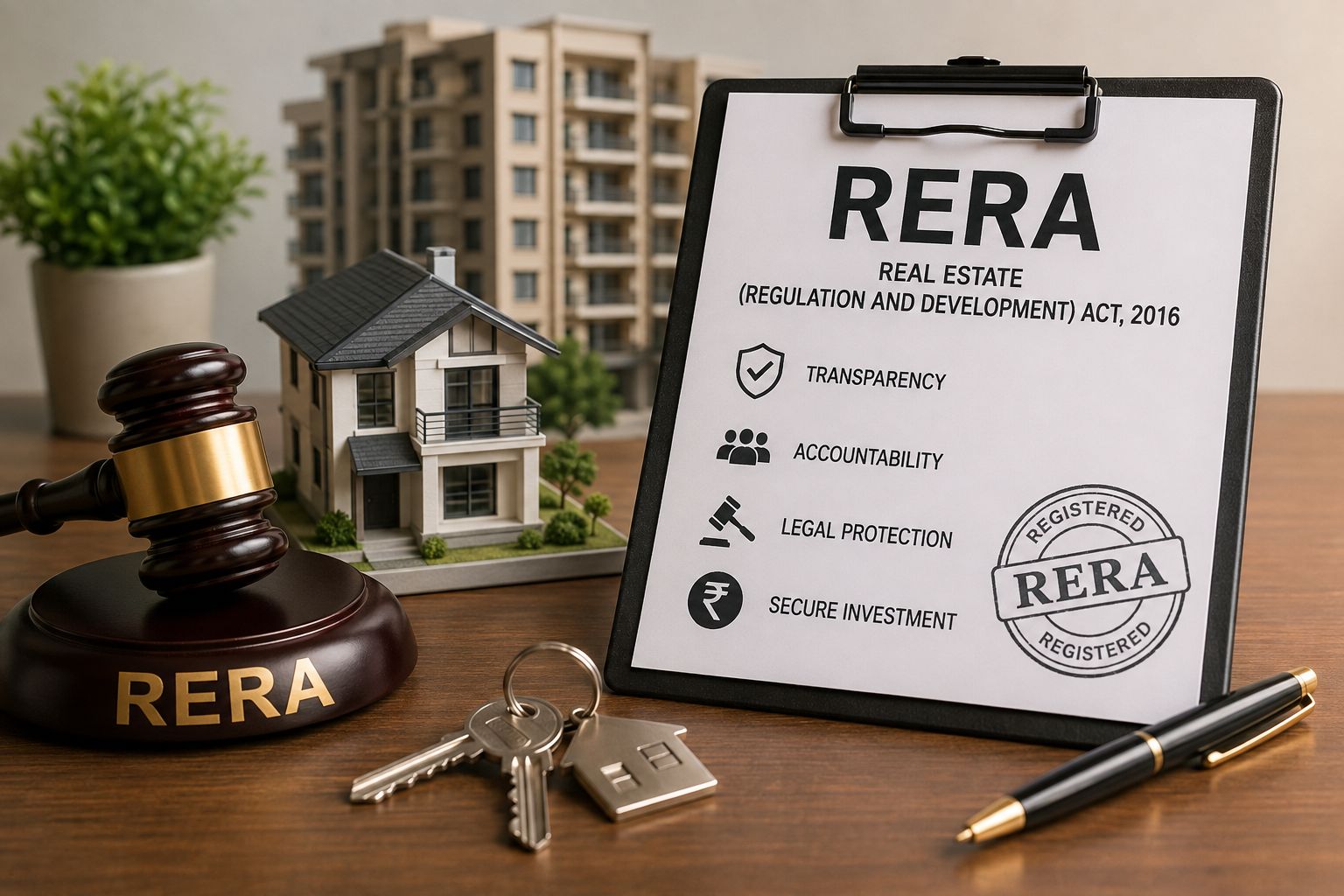
RERA (Meaning and Full Form) What Is RERA
RERA stands for the Real Estate (Regulation and Development) Act, 2016 – a law passed by the Indian government to make the real estate sector transparent and accountable.
RERA provides very little protection to homebuyers. Builders could:
You can promote a project without ownership of land or land clearance
Once you have the bookings, you can change the layout or amenities
Delay possession for years without penalty
Use money raised for one project to fund another
RERA was brought in to sort out exactly these problems. Every state in India has its own RERA authority – TS-RERA (Telangana), MahaRERA (Maharashtra), K-RERA (Karnataka) – which implements the act locally and has a public database of registered projects.
Why RERA Was Needed
Real estate was one of the least regulated big industries in India. This was changed by RERA which made it mandatory to register projects and compelled builders to give accurate information and gave buyers a legal body to approach if promises are not kept.
This is the step first-time buyers rush through the most — and regret the most.
Confirm RERA Registration Before You Pay Anything
Any project above a certain size must be registered with the state RERA authority. Before paying even a token amount, look up the project's RERA number on the official state portal and confirm the promised possession date, sanctioned plans, and any past complaints against the builder.
Get the Title and Encumbrance Certificate Checked
An Encumbrance Certificate (EC) shows whether the property has any existing loans, legal disputes, or unpaid dues attached to it. Have a lawyer trace the ownership chain back at least 13–15 years (longer for older or resale properties) before you sign anything. This single document has saved countless buyers from inheriting someone else's legal mess.
Step 5: Budget Properly for Stamp Duty and Registration
This is where a lot of first-time buyers get an unpleasant surprise, because it's rarely mentioned upfront by builders or brokers.
In most Indian cities, stamp duty, transfer duty, and registration fees together add up to roughly 6–7% of the property's value - calculated on whichever is higher: the actual sale price or the government's official guidance value for that locality. On a property worth ₹80 lakh, that can mean an additional ₹5 lakh or more that needs to be arranged separately from your loan and down payment.
Documents You'll Typically Need on Registration Day
- Sale deed drafted and reviewed by your lawyer
- Aadhaar and PAN cards of buyer and seller
- Encumbrance Certificate
- RERA registration certificate (for new projects)
- Passport-size photographs of buyer, seller, and witnesses
- Payment proof for stamp duty and registration fees
After registration, don't forget mutation - updating the local municipal or revenue records to reflect you as the new owner. Skipping this step is a common oversight that creates headaches years later when you try to sell or take a loan against the property.
Step 6: Let Technology Do the Legwork
You don't need to physically visit every project on your shortlist before narrowing it down. Immersive 360° virtual tours let you walk through the actual flat or villa – not a generic sample unit – from your phone or laptop, at any hour that suits you. It's a practical way to shortlist 3 - 4 serious contenders before spending your weekends on-site for the properties that genuinely deserve a physical visit.
Common Mistakes First-Time Home Buyers Make
- Paying a token amount before legal verification is complete
- Stretching the EMI to the maximum eligible amount instead of what's comfortable
- Ignoring resale value and buying purely on emotion
- Not budgeting for stamp duty, registration, and post-possession costs
- Skipping the RERA check because "the builder seems reputable"
- Forgetting to complete mutation after registration
Your Pre-Purchase Checklist
Before you sign anything, confirm:
- Your total budget accounts for stamp duty, registration, and a contingency buffer
- Your credit score and loan eligibility are confirmed with more than one lender
- The project's RERA registration is verified on the official portal
- A lawyer has reviewed the title chain and Encumbrance Certificate
- You've compared at least 3–4 shortlisted properties, ideally through both virtual tours and an in-person visit
- You understand the full cost of ownership — not just the EMI
Frequently Asked Questions
1. How much money do I actually need saved up before buying my first home?
Beyond the 15–20% down payment most lenders require, budget for stamp duty and registration (typically 6–7% of the property value), plus a contingency of 2–3% for unexpected costs. For an ₹80 lakh property, that's roughly ₹15–20 lakh in upfront cash, separate from your home loan.
2. Is it better to buy a new launch project or a resale property as a first-time buyer?
It depends on your priorities. New RERA-registered projects offer modern amenities and staged payments but come with construction timelines. Resale properties offer immediate possession and established neighbourhoods but need closer scrutiny on age, condition, and pending dues. Neither is universally better — match the choice to your timeline and risk comfort.
3. What is RERA and why does it matter so much for first-time buyers?
RERA (Real Estate Regulatory Authority) is a government body that regulates real estate projects to protect buyers from delayed possession, fund misuse, and misrepresentation. Any qualifying project must be registered, and checking that registration on the official state portal before making any payment is one of the simplest ways to protect yourself.
4. How long does the home loan approval process usually take?
With complete documentation — income proof, ID and address proof, property papers, and a clean credit score — approval typically takes anywhere from a few days to a few weeks, depending on the lender and whether the property has passed their legal and technical verification.
5. What's the single biggest mistake first-time home buyers make?
Paying a token or advance amount before legal verification is complete. It's tempting when a property feels perfect, but skipping the title check and RERA verification is how buyers end up stuck with properties that have unresolved legal or ownership issues.